





















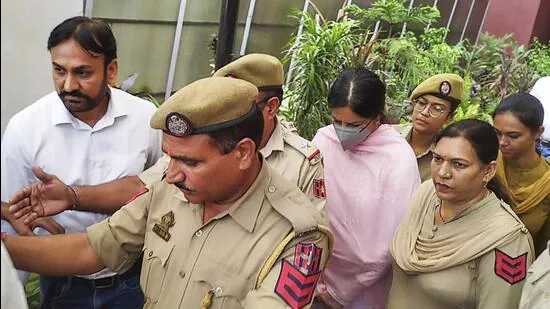

Rubaiya Sayeed on Thursday moved an exemption application through her lawyer as she did not appear in a special court in Jammu for the hearing of the case related to her abduction in 1989 when her father, the late Mufti Muhammad Sayeed, was the Union home minister. The case will now be heard next on November 24.
Jammu & Kashmir Liberation Front (JKLF) chief Yasin Malik, who is undergoing life imprisonment in Delhi’s Tihar prison in a terror funding case, and his aides allegedly abducted Rubaiya Sayeed in December 1989 and sought the release of five arrested militants.
Additional advocate general advocate Monika Kohli, who is also the special public prosecutor in the case, said all the accused except Malik were present in the court. Malik joined the proceedings virtually.
On September 21, the court issued a warrant for Malik’s physical appearance at his request. Tihar prison authorities wrote to the court that Malik’s movement is restricted, citing a Union home ministry’s order.
Kohli said Malik was to cross-examine Rubaiya Sayeed.
Mohammad Aslam Goni, the lawyer of nine accused other than Malik in the case, said the hearing did not take place because no witness was present and the court adjourned the case.
Goni cited a Supreme Court order and said it underlined a trial is not possible without the physical appearance of the accused and that security cannot be given as a reason for not producing them in court. He added the special court did not know about the Supreme Court order.
“It is a fundamental right of the accused to be in the court…Malik desired to cross-examine the witnesses [including Rubaiya Sayeed in person but the state has taken a stand that he cannot be produced physically.”
On July 15, Rubaiya Sayeed identified four of her kidnappers, including Malik, in the special court.