






















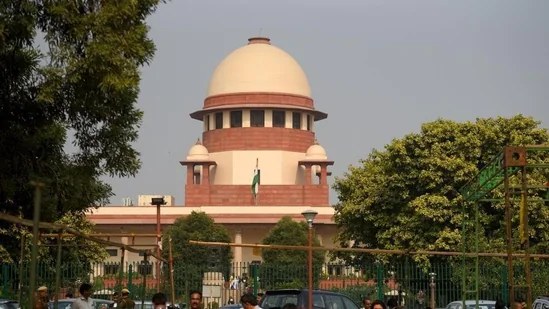

No criminality has been found following an investigation into the taped conversations of former corporate lobbyist Niira Radia with a range of politicians, industrialists and government officials, the Central Bureau of Investigation (CBI) told the Supreme Court on Wednesday.
Additional solicitor general Aishwarya Bhati, appearing for CBI, apprised a bench headed by justice Dhananjaya Y Chandrachud about a sealed cover report submitted by the agency in 2015 regarding the outcome of the court-ordered probe. The matter wasn’t taken up by the court all these years.
“No criminality has been found during the investigation. A sealed cover report has been submitted to the court and the outcome of the investigation has also been forwarded to the departments concerned,” Bhati submitted before the bench, which also included justices PS Narasimha and Hima Kohli.
CBI is expected to file the latest status report before the court takes up the matter in October.
The report has been submitted by CBI in connection with a writ petition filed by industrialist Ratan Tata, demanding a probe into the leak of audio tapes involving Radia, which he said was a violation of his privacy right.
On the other hand, the NGO, Centre for Public Interest Litigation (CPIL) pressed for a probe into the tapes and demanded that they all be made public.
In October 2013, the top court directed CBI to examine 14 issues that were identified by the agency after examining the transcripts of over 5,800 taped conversations of Radia that were originally intercepted by the government between 2008 and 2009 as part of an investigation into tax evasion.
CBI registered 14 preliminary enquiries (PEs) into the matter to probe possible offences that emerged in conversations between the corporate lobbyist and high-profile individuals and corporates. All cases stand closed now due to lack of adequate evidence.
While ordering a probe in 2013, the Supreme Court said: “The conversations are indicative of the deep-rooted malice by private enterprises in connivance with government officials and others for extraneous purposes. Interested persons have secured gains from government officers and others which are suggestive of corrupt means being adopted by private parties to extract gains.